Stronger Together Family Bonding Pack: Printable Fun
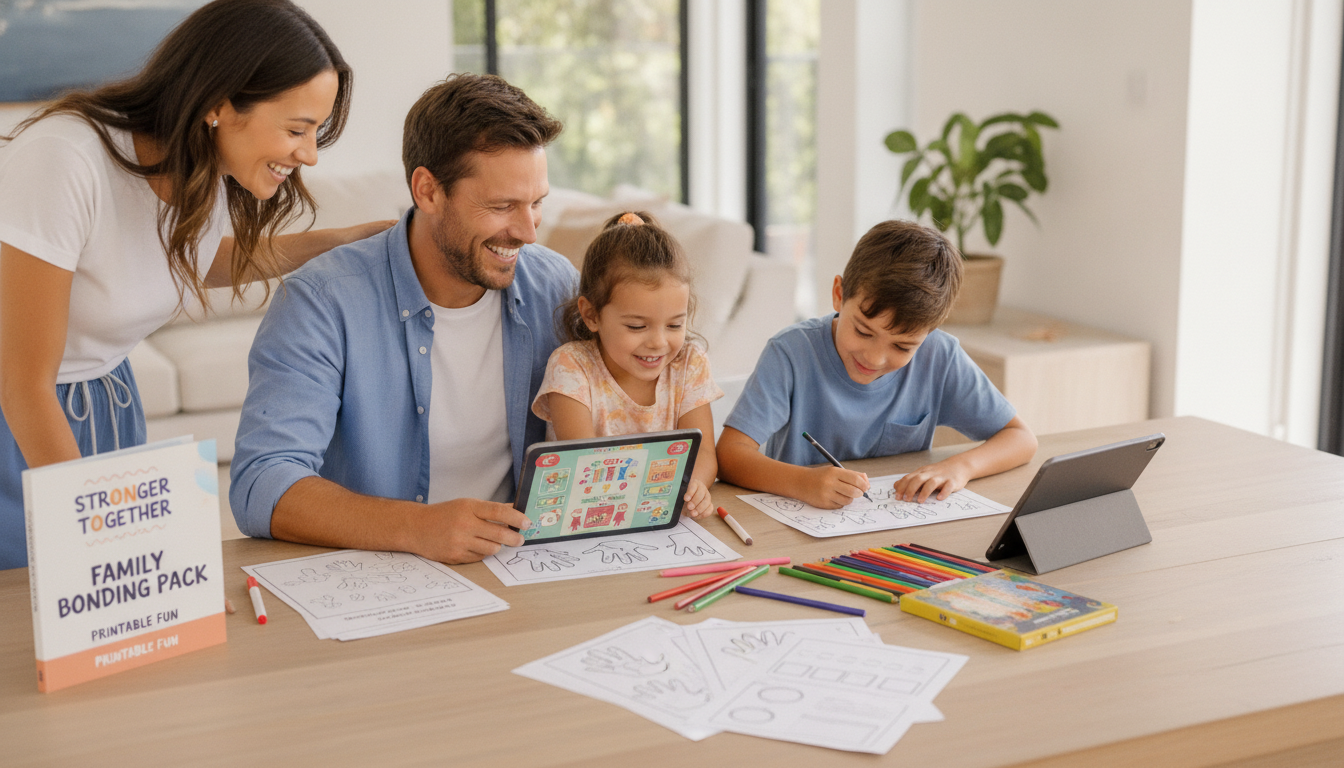
Stronger Together: A Family Bonding Pack for Meaningful Time at Home and Outside
Busy schedules and screens can make it hard to slow down and truly connect. Stronger Together: Family Bonding Pack is a digital set of printable activities, prompts, and checklists designed to help kids and parents build routines of shared time—without complicated prep or expensive outings. Use it for weeknights, weekends, rainy days, or quick outdoor resets when everyone needs a fresh start.
What the Stronger Together Family Bonding Pack Is
This pack is built for real families who want connection that’s easy to start and simple to repeat. It’s a digital activity guide and eBook you can print as needed (or keep on a tablet for quick access), with options that work at home and outside.
- Digital activity guide and eBook built for kids and parents to use together
- Printable at-home connection activities for low-prep family time
- Outdoor activities that encourage conversation, teamwork, and movement
- A family time checklist to support consistency and make planning easier
- Designed to work for a range of ages by adjusting the difficulty and roles
Play is a powerful connector, and it supports healthy development in ways that don’t always show up on a to-do list. For a deeper look at why play matters, the American Psychological Association’s overview on play is a helpful reference.
Who It Helps Most (and When It’s Especially Useful)
- Families looking for simple ways to connect after school or work
- Parents who want ready-to-go activities that don’t require special supplies
- Kids who thrive on predictable routines and clear choices
- Siblings who need cooperative tasks to reduce bickering and build teamwork
- Moments of transition: moving homes, new school year, busy seasons, or travel breaks
If screens have started to crowd out conversation, it can help to set clear, realistic expectations around media and family communication. The American Academy of Pediatrics media toolkit offers practical guidance for families.
How to Use the Pack: A Simple Weekly Rhythm
The easiest way to make family time happen is to make it predictable—without making it rigid. A light weekly rhythm keeps decision-making small and follow-through doable.
- Pick 2–3 activities for the week: one quick weekday option, one longer weekend option, and one outdoor reset
- Print a small stack at once (or keep a digital folder) so choices are ready when time is short
- Assign roles: a “planner” (parent), a “helper” (kid), and a “reporter” (anyone) to share highlights afterward
- Use the checklist to track what felt best rather than aiming for perfection
- Repeat favorites to build traditions; rotate new prompts when energy dips
Quick picks by time and energy level
| Time available | Energy level | Best-fit activity type | Ideal moment |
|---|---|---|---|
| 10–15 minutes | Low | Conversation prompts + mini challenge | After dinner, before bedtime |
| 20–30 minutes | Medium | Printable game or collaborative task | After school, weekend morning |
| 30–60 minutes | High | Outdoor connection activity | Weekend afternoon, family walk |
| Any length | Mixed | Checklist + choose-one menu | When everyone wants different things |
At-Home Connection Activities That Actually Fit Real Life
At-home bonding doesn’t need a big craft setup or a perfectly quiet house. The best options are the ones that are easy to start—especially on the days you’d normally skip family time.
- Low-prep choices that reduce decision fatigue: pick, print, do, and debrief
- Conversation starters that help kids open up without feeling interrogated
- Cooperative challenges that build “same team” energy (especially helpful after conflict)
- Creative options for different learning styles: talk, move, make, and reflect
- Easy ways to scale for ages: add a timer, add a rule, or let a child lead
For families with toddlers and preschoolers, routines work best when they’re clear and consistent. The CDC’s Essentials for Parenting includes practical, age-appropriate ways to support positive behavior and connection.
Outdoor Activities for Fresh Air, Reset, and Teamwork
Sometimes the fastest way back to calm is a short step outside. Outdoor prompts work well for after-school decompression, weekend resets, or any time the mood indoors feels stuck.
- Simple outdoor prompts that work in a backyard, park, or neighborhood walk
- Movement-based activities that help restless kids regulate and reconnect
- Observation and gratitude challenges that spark natural conversation
- Team missions that make siblings allies instead of competitors
- Weather-flexible ideas: short bursts outside even on busy days
The Family Time Checklist: Turning Good Intentions into a Habit
Making It Work for Different Ages (Toddlers to Tweens)
What You Need to Get Started
When Family Connection Feels Hard: Small Fixes That Help
Related Guides for a Healthier Home Rhythm
- Conflict-Resolution Workbook for Couples can help adults communicate more calmly during stressful seasons, making it easier to show up as a team.
- What to Do When Your Toddler Has Nightmares pairs well with evening connection routines—especially when bedtime has been tense.
- Personal Finance Made Easy Ebook can reduce money stress and free up mental space for more consistent family time.
FAQ
Is this pack suitable for different ages in the same family?
Yes. Activities can be scaled up or down by shortening steps, adding rules, or letting older kids lead, and assigning roles (planner/helper/reporter) helps mixed ages participate without competing for control.
Do the activities require special supplies or a lot of prep time?
No—most options are designed to be low-prep with common household items like paper, markers, and tape, plus optional basics like a ball or chalk. Many activities fit into 10–15 minutes when time is tight.
How often should a family use the checklist to see a difference?
A realistic goal is 2–3 times per week, focusing on consistency rather than long sessions. A quick recap after each activity helps everyone notice progress and choose what to repeat.












Leave a comment